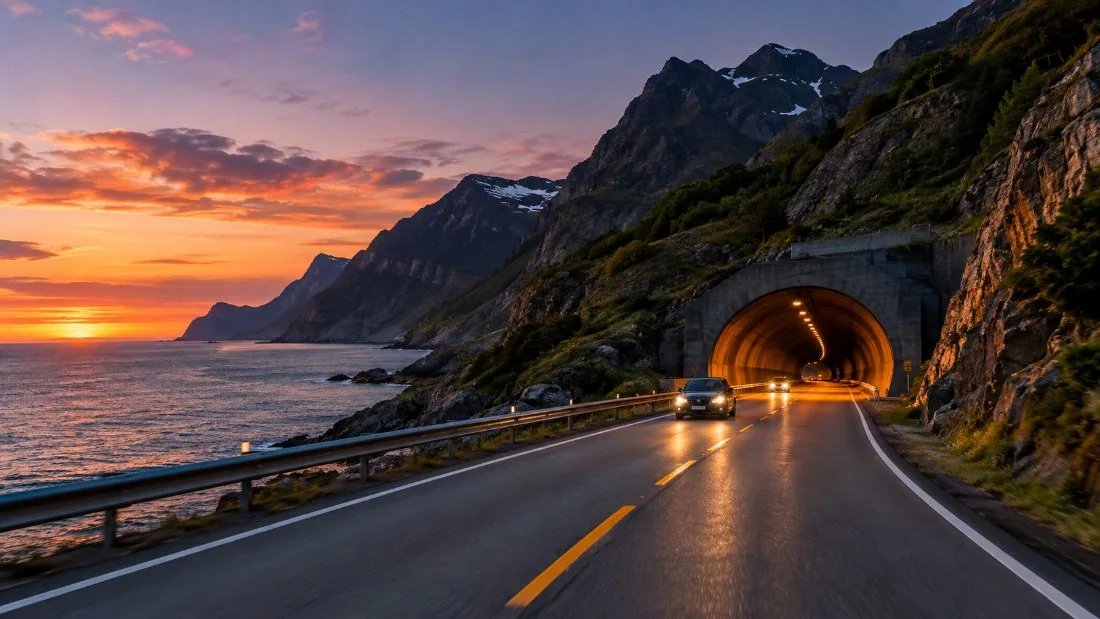
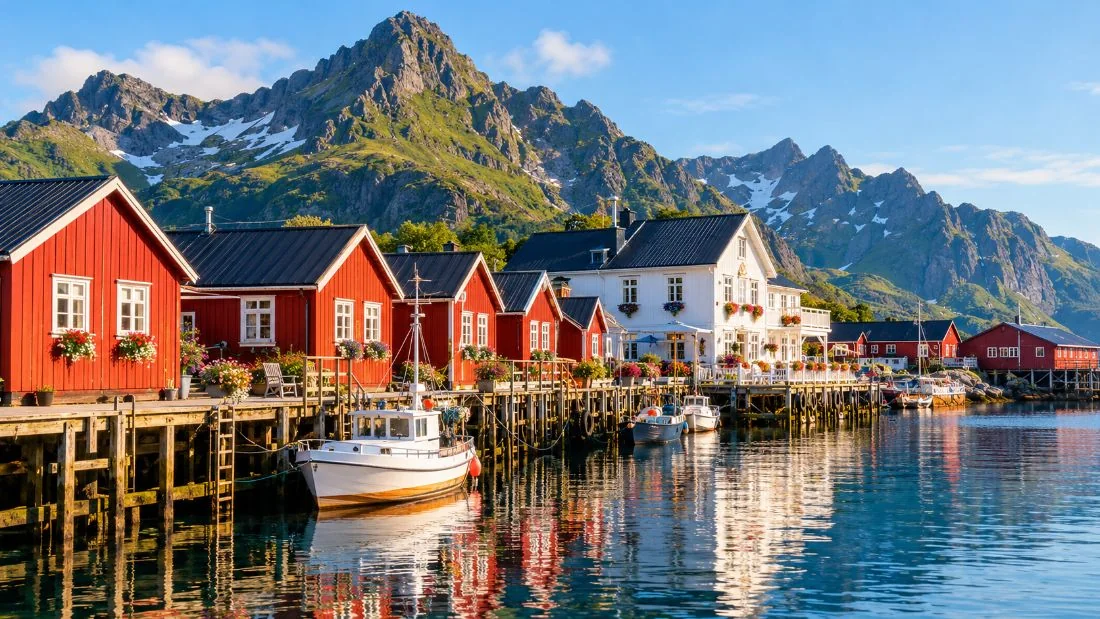
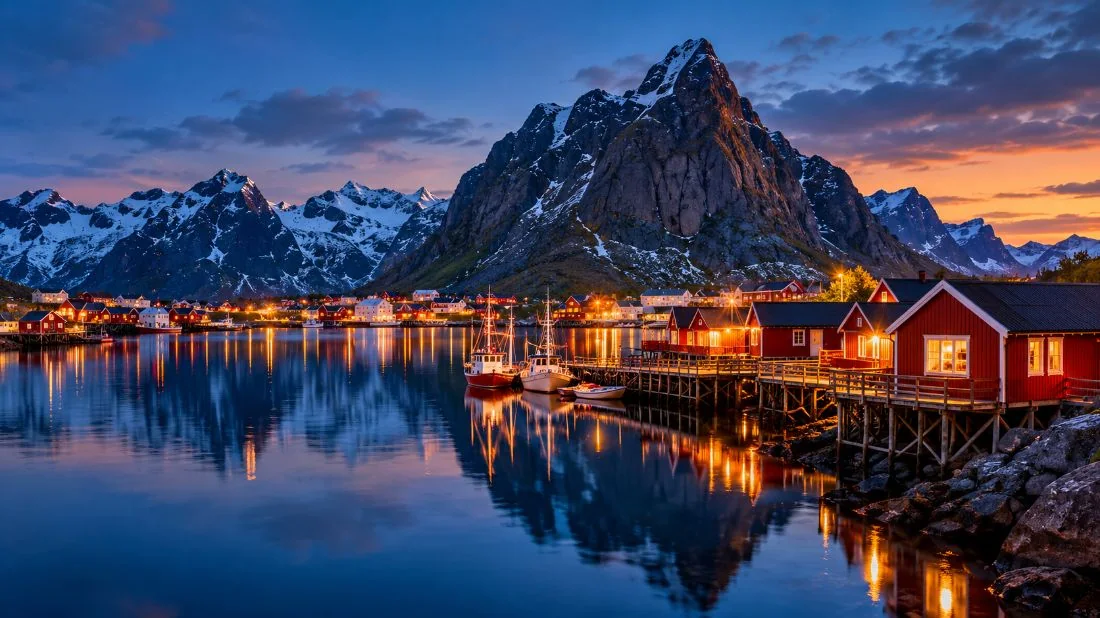
A chain of steep granite islands in the Norwegian Sea, about 170 km north of the Arctic Circle.
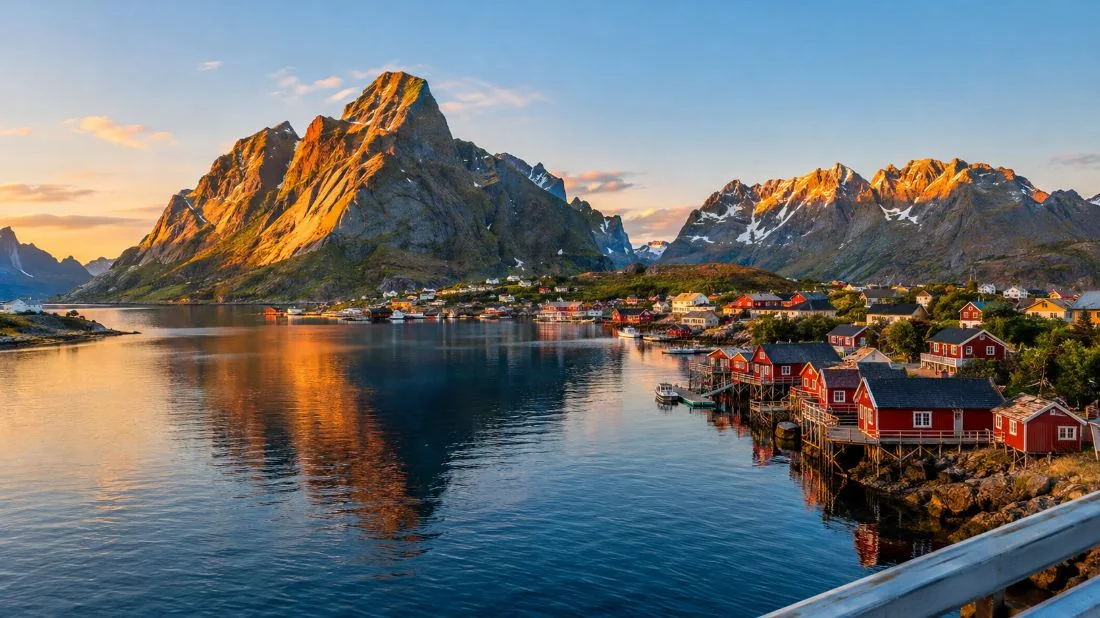
Watch sea eagles circle the Trollfjord, eat cod by the red cabins of Reine, and stand on a white beach under the midnight sun or the northern lights.
Start town, spelled outSvolvær, Hamnøy or a hotel pickup
Real guest ratingsLive GetYourGuide figures
Free cancellationUp to 24 hours before, on every tour here
Secure checkoutBooked and paid on GetYourGuide
Tours
Choose your Lofoten tour
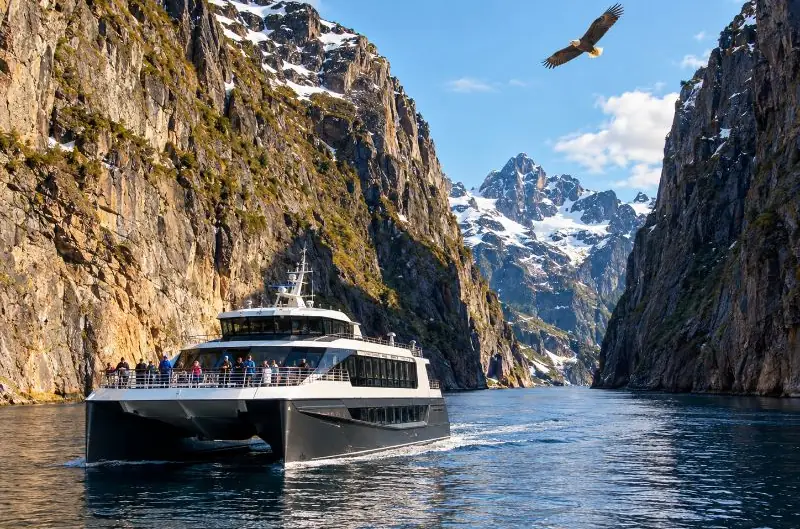
In the centre, the quiet electric cruise from Svolvær into the Trollfjord, the easiest way to see it.
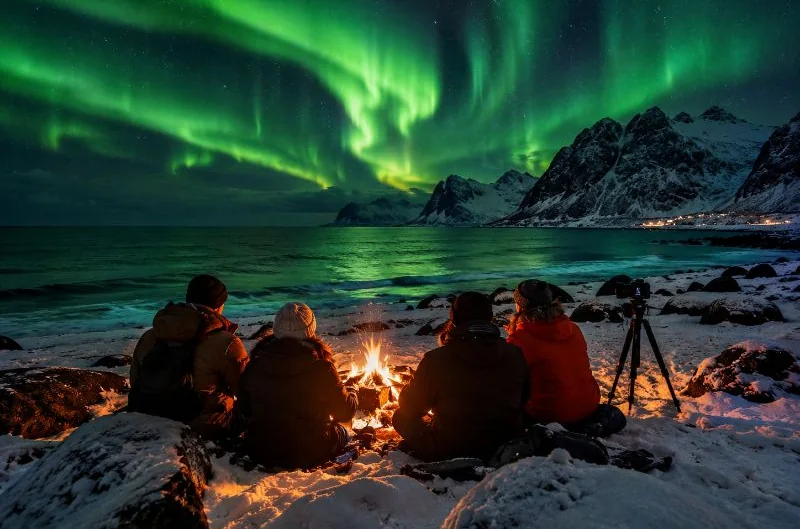
Either side, a guided day down the E10 to Reine and Å, and a small-group night out for the northern lights.
A small van with a local guide drives you down the E10 to Hamnøy, Sakrisøy, Reine and Å, with a seafood meal on the way. About 2.5 hours of road each way, and none of it at your wheel.
What's included
Local guide and certified driver, 8 guests at most
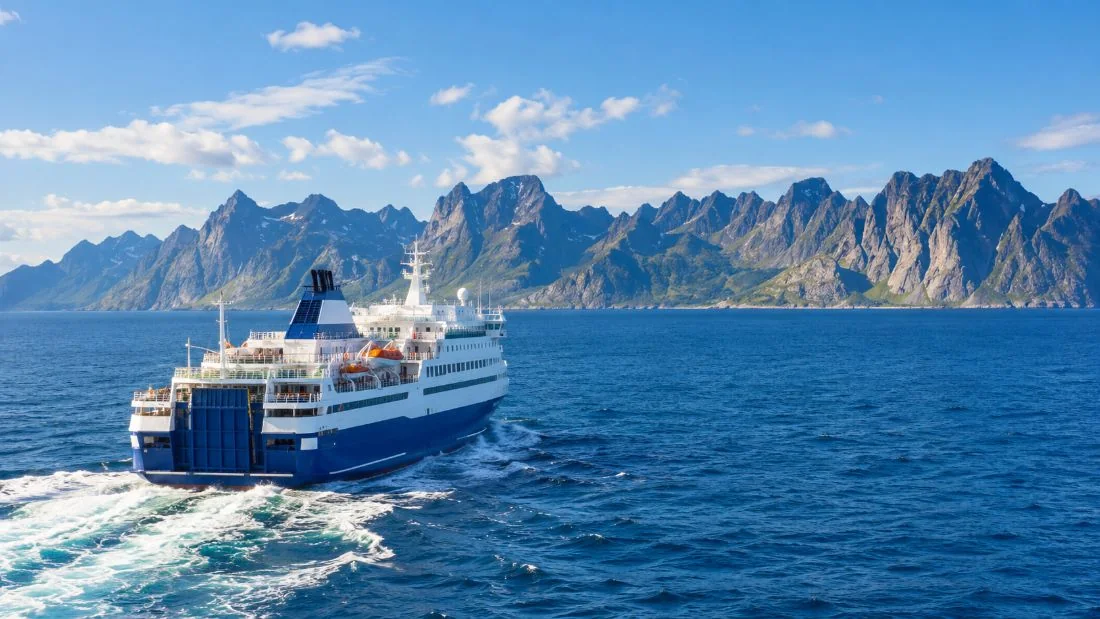
A quiet electric boat sails about an hour from Svolvær to the narrow Trollfjord, with sea eagles over the cliffs. Warm panoramic lounges, open decks and an underwater drone when the sea allows.
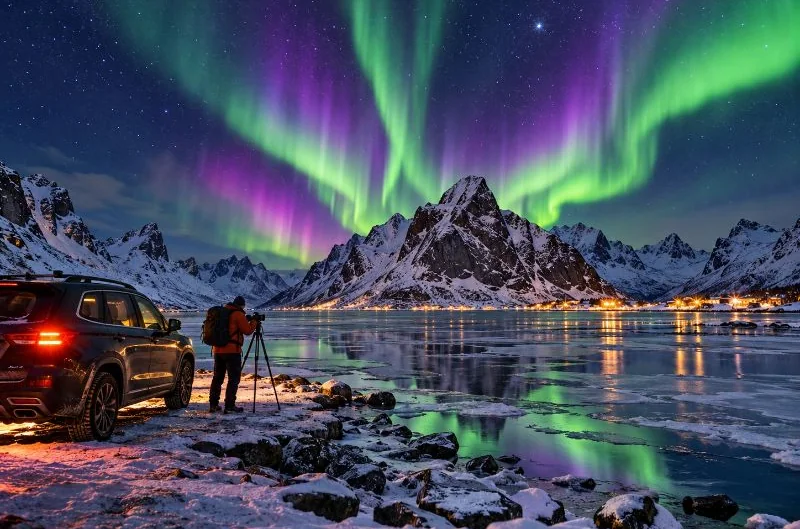
A guide and photographer drives a group of eight to wherever the sky looks clearest. Hot drinks, food, a fire when the weather allows, and your photos by link within 72 hours.
Lofoten is long and thin, and most tours leave from Svolvær at the northern end. Check the start before you
book: from Reine, a Svolvær departure is two hours away by car.
Every tour here cancels free up to 24 hours before. Eight of the ten start in or around Svolvær;
the kayak trip starts in Hamnøy, next to Reine, and the horse ride on Gimsøy.
Before you book
One road, two ends.
Lofoten is not one place but a line of islands joined by bridges and undersea tunnels. The E10 runs the whole way, 163 km
from Fiskebøl in the north to the village of Å at the end of the road. At the top sits Svolvær, the only real town, with
an airport, the Hurtigruten quay and the offices of most tour companies. At the bottom sit the villages everyone has seen in
photos: Hamnøy, Sakrisøy, Reine and Å.
That is the thing to understand before you book. Most tours start in Svolvær, and the postcard villages are about
two hours away by car. Stay in Reine and want the Trollfjord cruise? That is a long drive each way. Stay in Svolvær and
want Reine? Take the day tour, or rent a car. Even the most famous fjord trip here bends the map: the Trollfjord cuts into
Austvågøya but belongs to Hadsel, a Vesterålen municipality.
163
Kilometres of E10 from Fiskebøl to Å, the one road through the islands,
ferry-free all the way to Moskenes. Strong wind can close the bridges for hours, and there is no other route.
SvolværHenningsværLeknesReineÅ
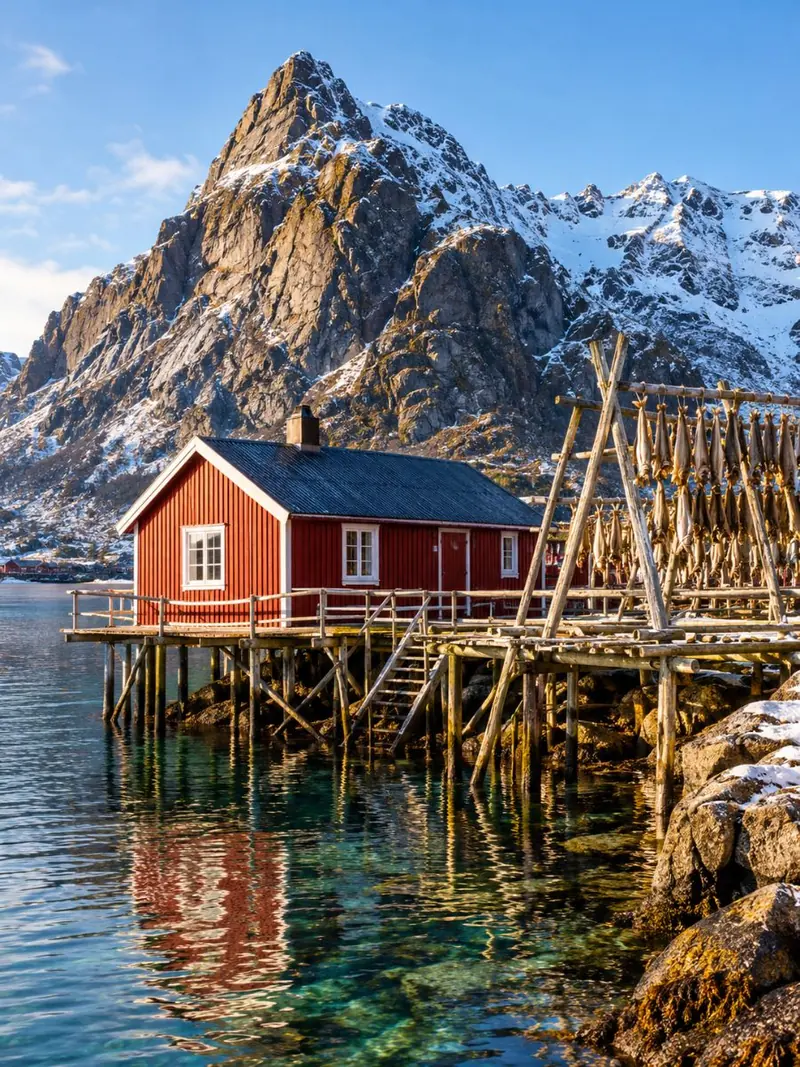
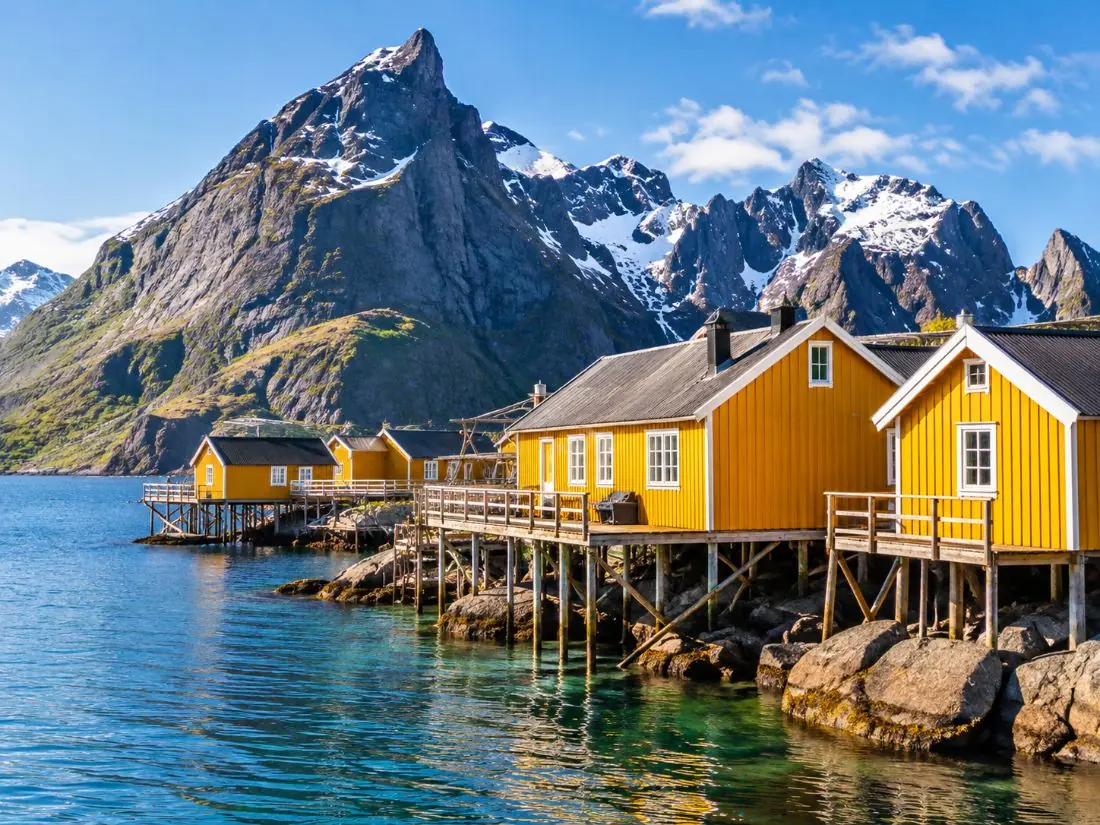
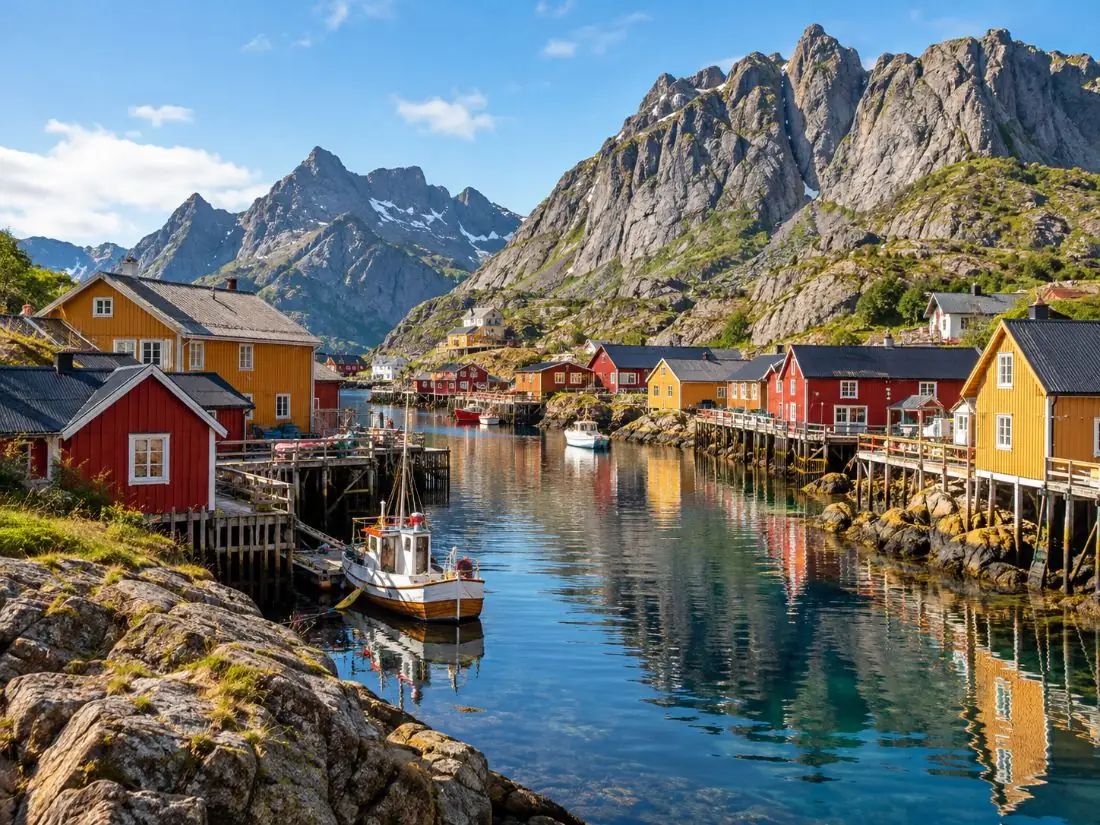
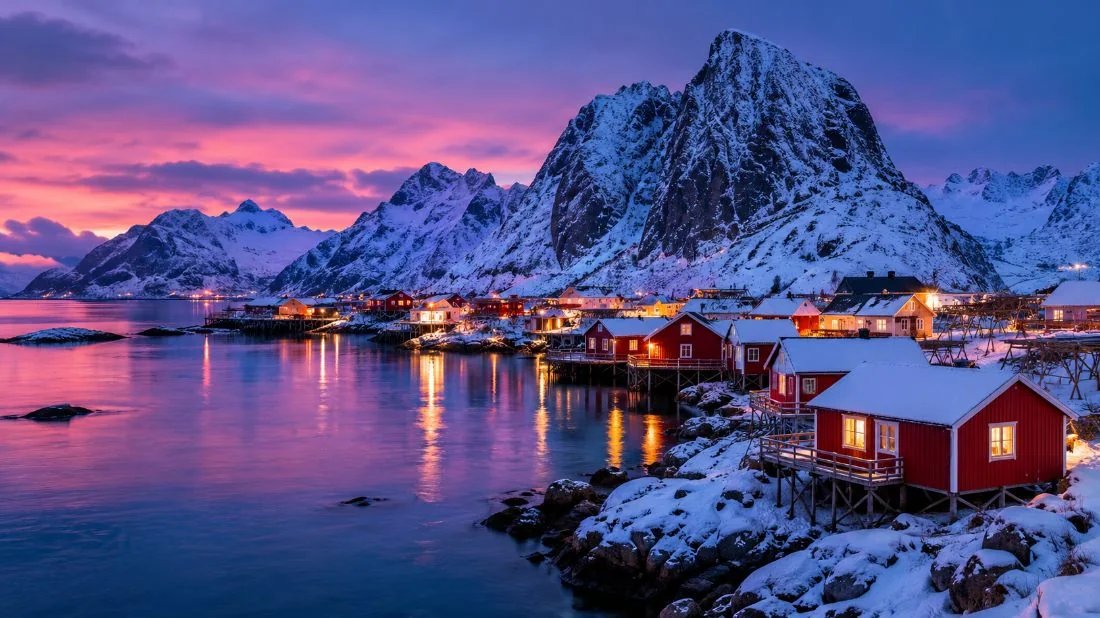
Rorbuer: fishermen's cabins built on stilts at the water's edge, most of them now rented to visitors.
01
Where to stay?
Svolvær for tours and transport, Reine or Hamnøy for the scenery. Many people split the stay.
02
When to go?
June and July for midnight sun, September for the first aurora, February and March for snow and light.
03
Do I need a car?
Not for the tours here: several include pickup. For the beaches and villages on your own schedule, yes.
04
How cold is it?
Milder than the latitude suggests: winter days often sit between -5 and +3°C. Wind and rain are the real test.
Your days
Four ways to spend a day in Lofoten
Most visitors mix them: one boat trip, one long drive south, something active, and a night out when the sky is dark.
01
On the water
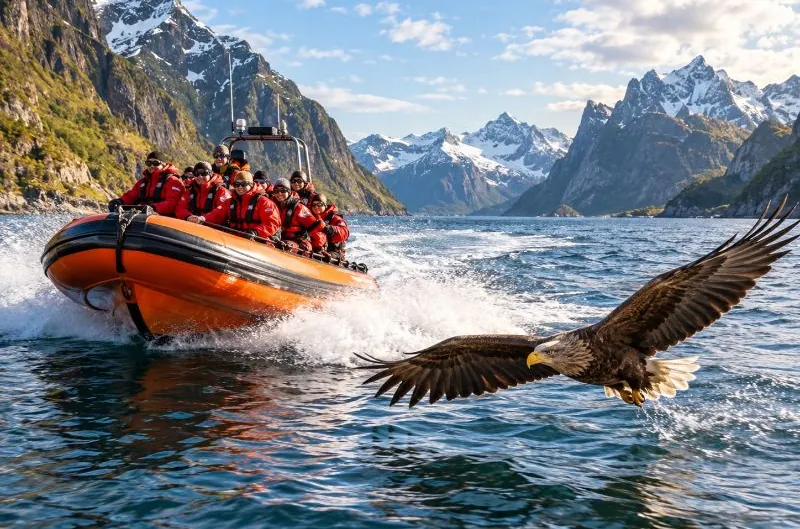
Cruise or RIB from Svolvær through Raftsundet into the Trollfjord, where sea eagles hunt along the cliffs.
2 to 3.5 hours
02
Down the E10
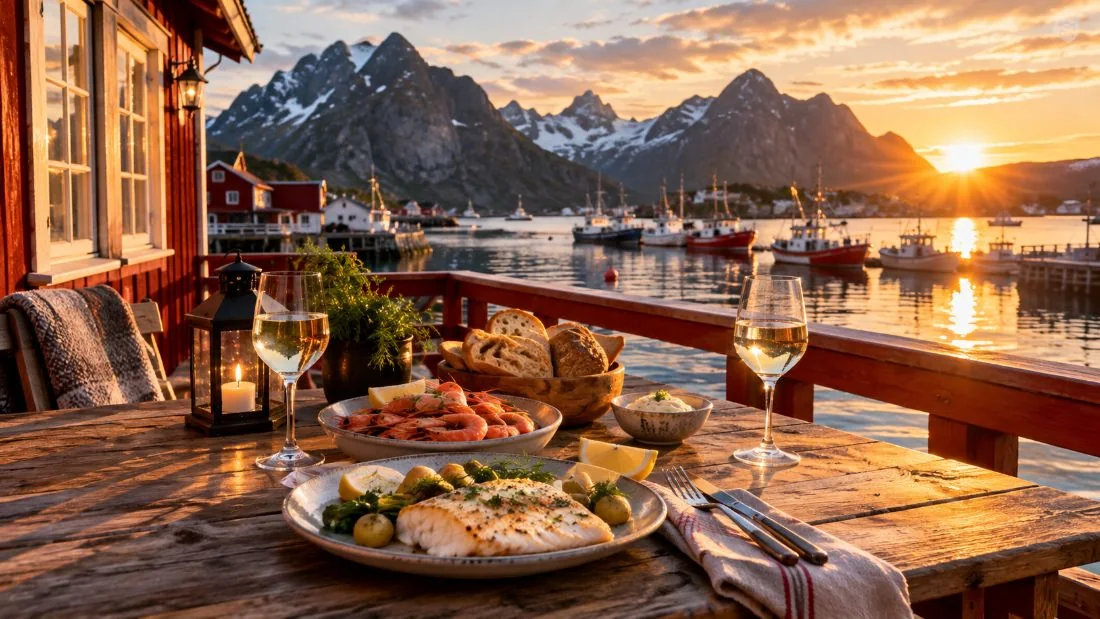
Bridges, beaches and fishing villages to Reine and Å at the end of the road, with a seafood stop.
A full day
03
Paddle or ride
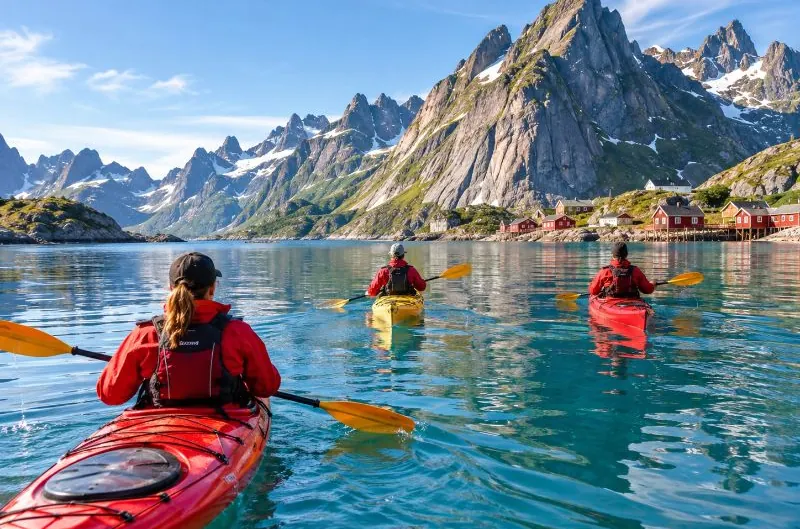
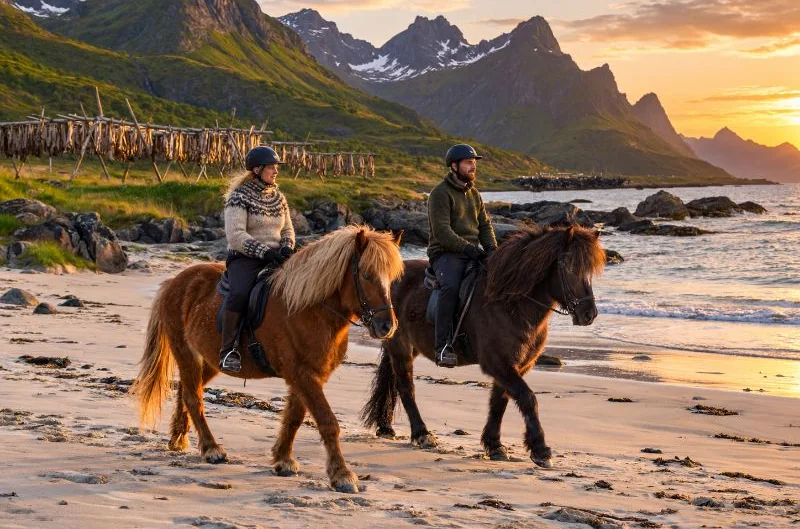
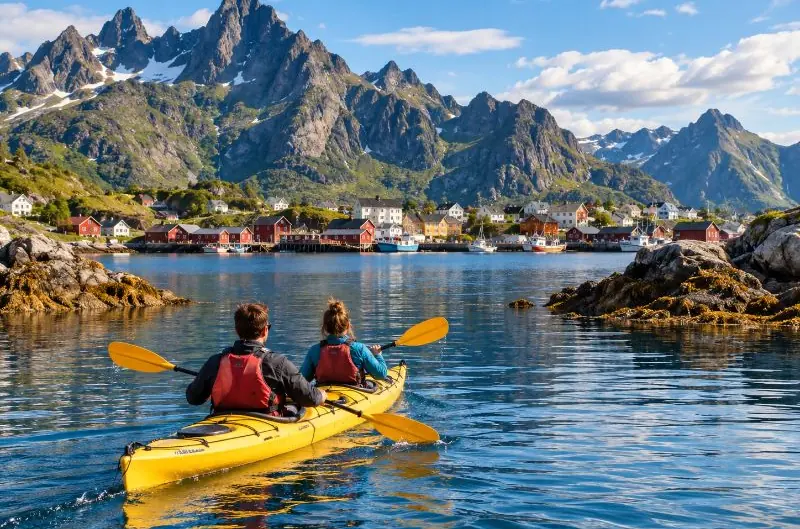
Kayak the Reinefjord or the islands off Svolvær, or ride an Icelandic horse along the beach on Gimsøy.
1.5 to 3 hours
04
After dark
From late August to mid April, a guide drives to clear sky and photographs you under the aurora.
Free: the views, the beaches, the hikes and tap water, which is safe to drink.
Free on foot: the Bodø to Moskenes ferry for foot passengers; cars pay a fixed fare.
Paid: museums such as the Fishing Village Museum in Å and the Lofotr Viking Museum, plus parking near Reinebringen and Kvalvika.
The big costs: rooms, meals out, car hire and guided tours. Norway's restaurants and hotels run about 40% above the EU average.
No tourist tax in 2026. A 3% overnight fee may start from 2027: see the tax update.
Tents are banned on most of Haukland beach, the Reine peninsula and Reinebringen, among other spots.
No open fires from 15 April to 15 September.
No stopping on the E10 itself; a car on the shoulder near Reinebringen risks a parking fine.
Drones are banned in Lofotodden National Park, including Kvalvika and Bunes.
Svolvær to ReineAbout 2 hoursBy car on the E10, without stops. Most tours start at the Svolvær end.
Bodø to Moskenes3 h 15 minThe direct car ferry across the Vestfjord, landing near Reine.
Midnight sun28 May to 14 JulyVisit Lofoten's dates. The sun never sets, and hikers go up at midnight.
Polar nightAbout 3 to 4 weeksNo sunrise around Christmas, with soft blue twilight at midday.
Northern lightsLate Aug to mid AprOn clear, dark nights. Cloud is the main enemy, not the forecast.
Refund24 hoursFree cancellation up to a day before, on every tour here.
Where it happens
Where the tours start
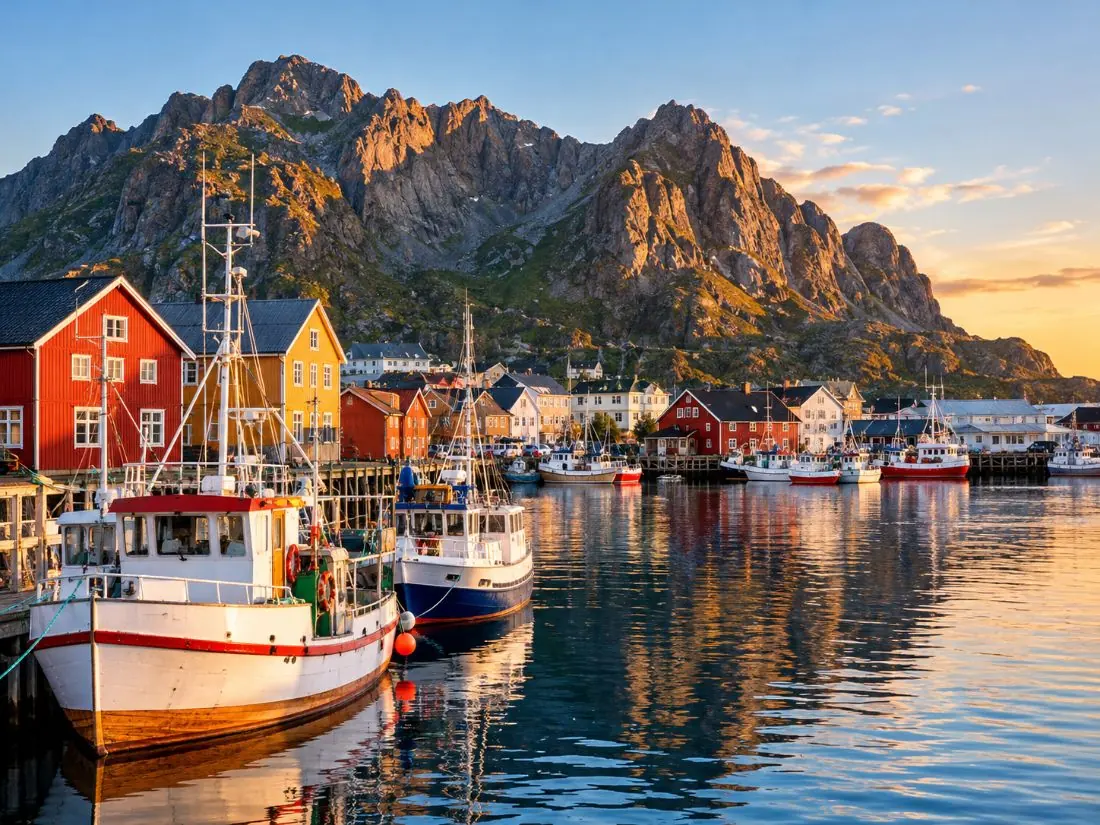
Svolvær harbour, mostly
Meeting points: the square by Thon Hotel Lofoten, Sjømannsgata 5, Svinøya Rorbuer, or your hotel
Svolvær is where the boats, the guides and the vans are based. The Trollfjord cruise leaves from the square next to Thon
Hotel Lofoten; the RIB, fishing and kayak trips meet at the Go2Lofoten office in Sjømannsgata. The northern lights trips and
the photo tours pick you up at your hotel. The exceptions are the Reinefjord kayak, which starts in Hamnøy at the far end,
and the horse ride on Gimsøy, which includes pickup.
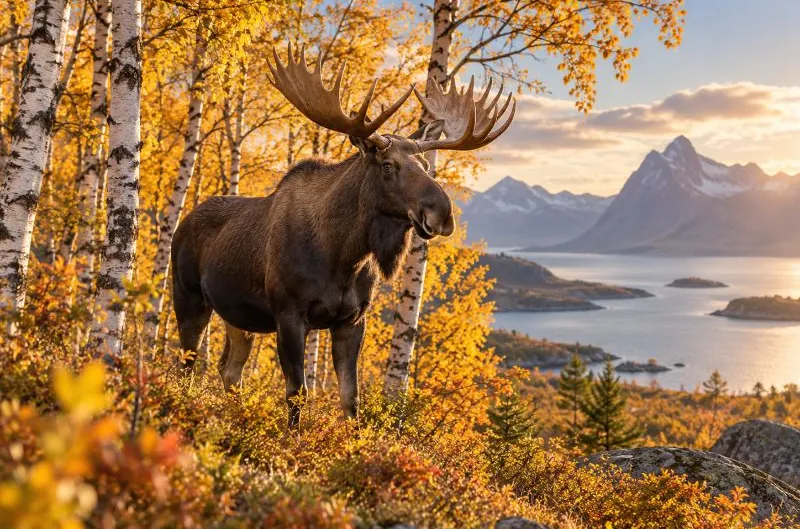
Lofoten has no moose to speak of; Vesterålen, just north, does. A local guide drives a group of eight through the valleys around Sortland at the hours moose feed, with binoculars and warm boots on board, and sends you the photos afterwards.
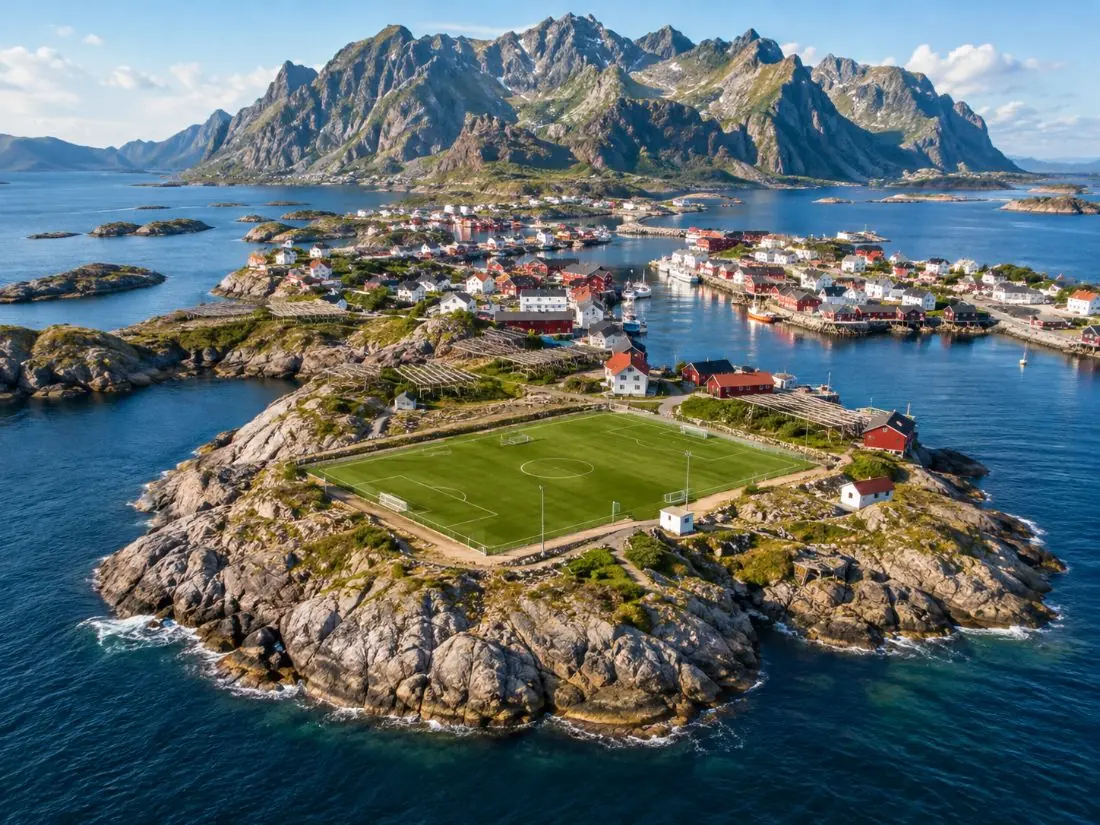
Lofoten looks small on a map of Norway. On the ground it is a long day's driving from one end to the other,
and that shapes everything from where you sleep to which tour makes sense.
Why it looks like nowhere else
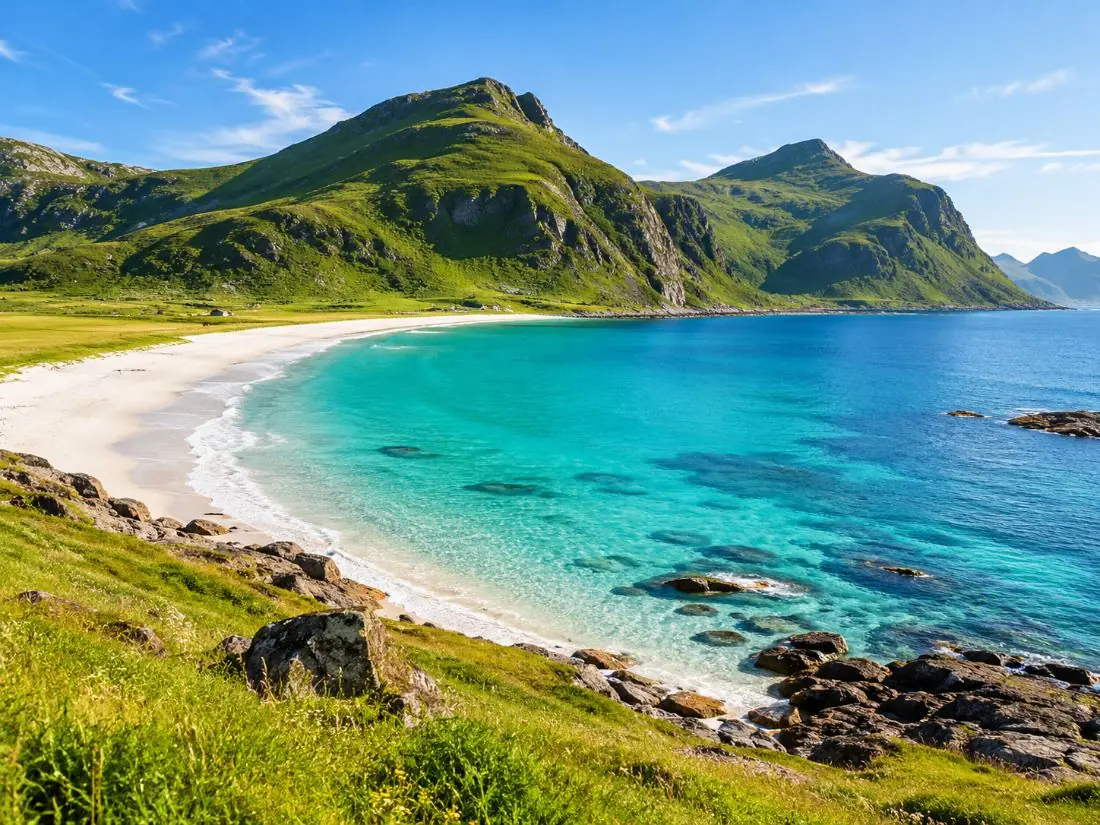
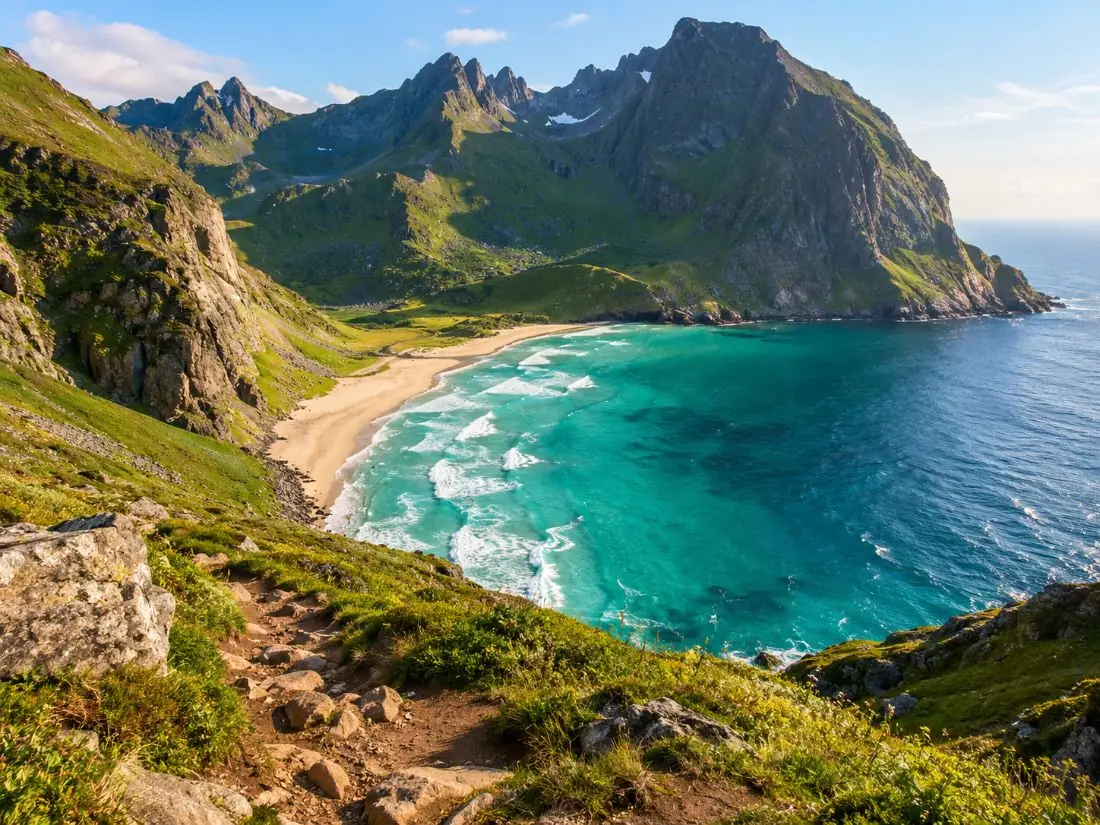
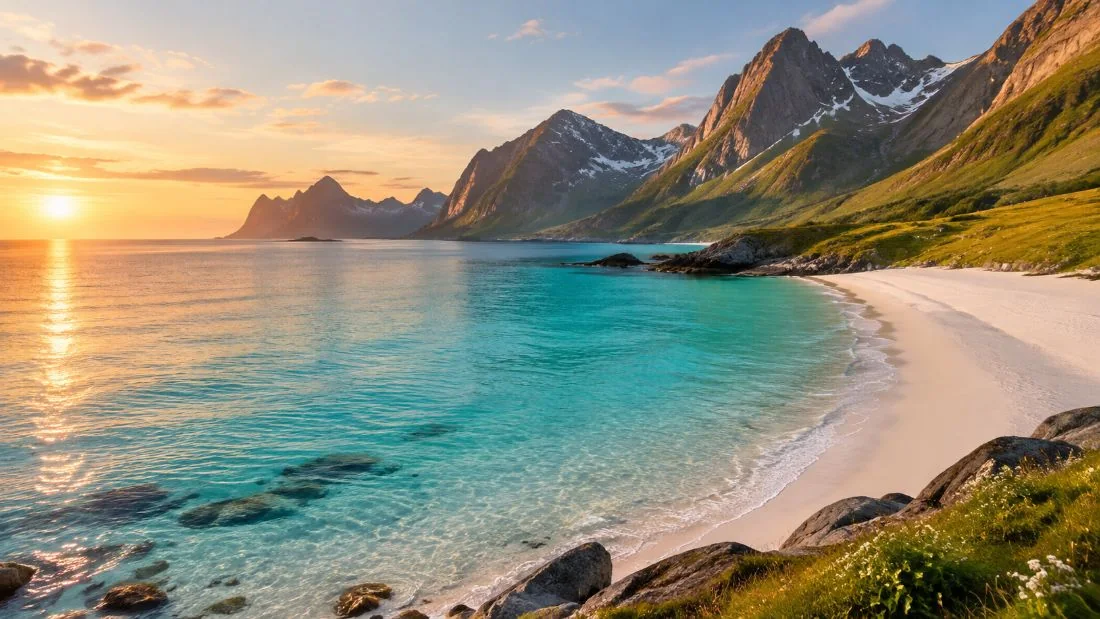
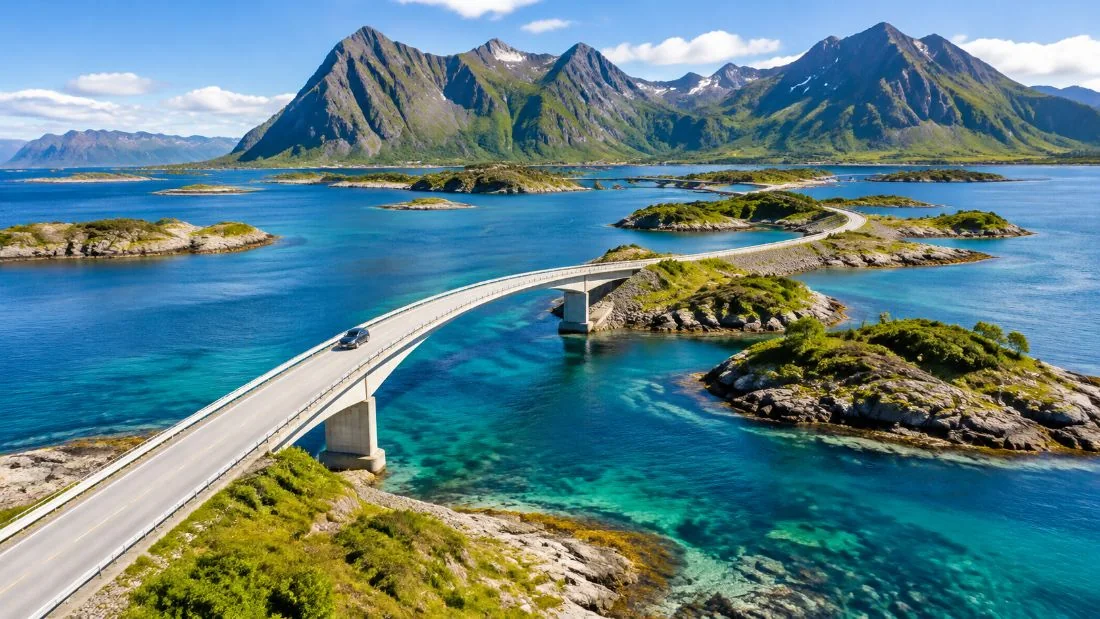
The islands rise straight out of the sea as a wall of granite peaks, with white beaches and turquoise water at their feet.
Lofoten lies between 68 and 69 degrees north, yet the winters are mild for the latitude: warm North Atlantic water gives the islands
one of the largest temperature anomalies for their latitude anywhere, and winter days often sit just around freezing. What it gets instead is wind and rain. Reine
collects well over 2,000 mm a year, and weather shapes nearly every plan here.
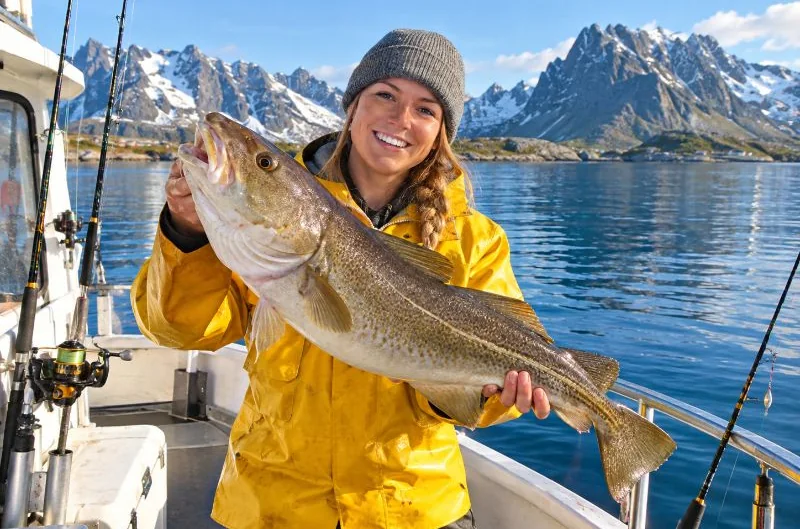
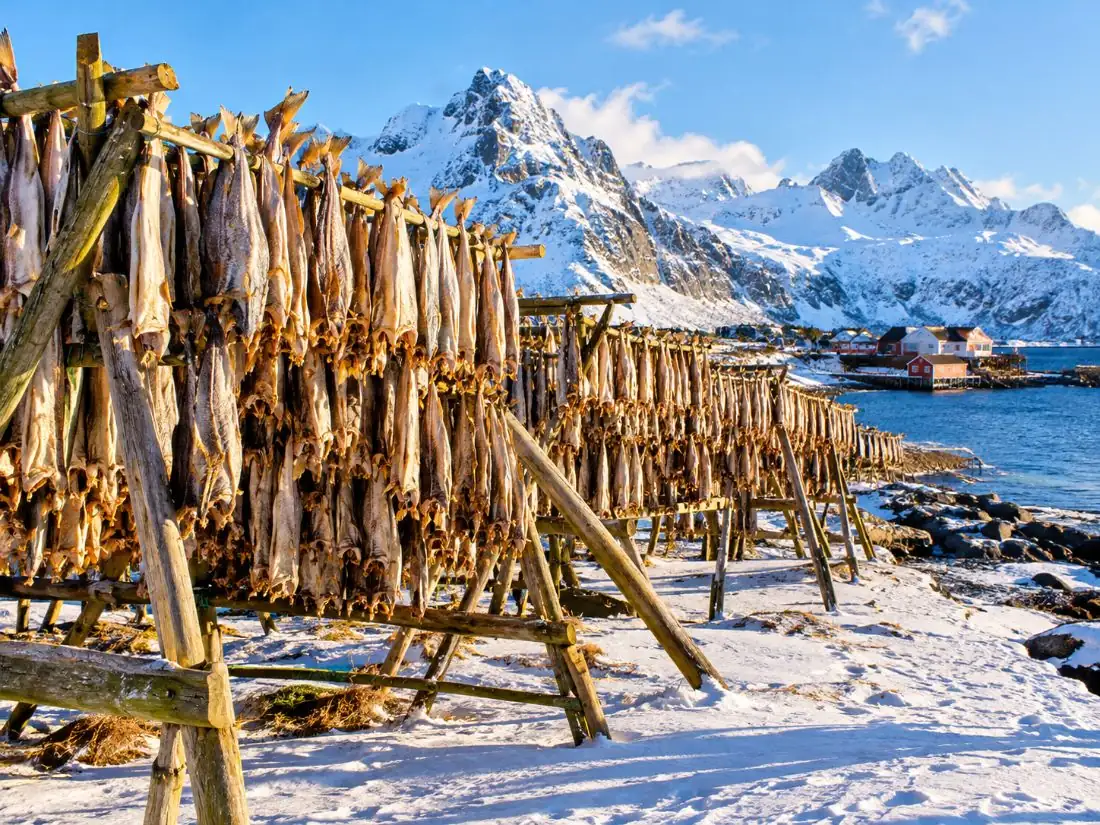
People have fished these waters for more than a thousand years. Every winter the skrei, the Arctic cod, come here to spawn, and from January to April the wooden racks fill with drying fish. "Stockfish from Lofoten" became the first
Norwegian food with protected EU status, and much of it is still graded for the Italian market.
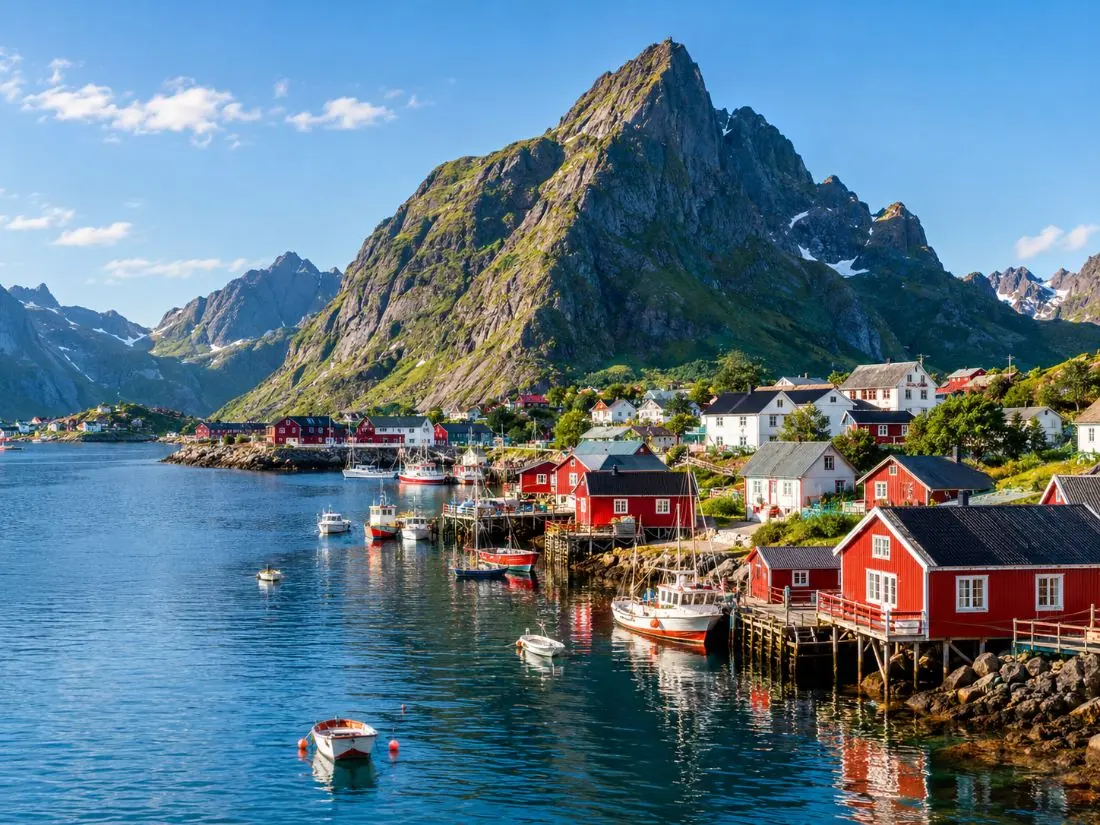
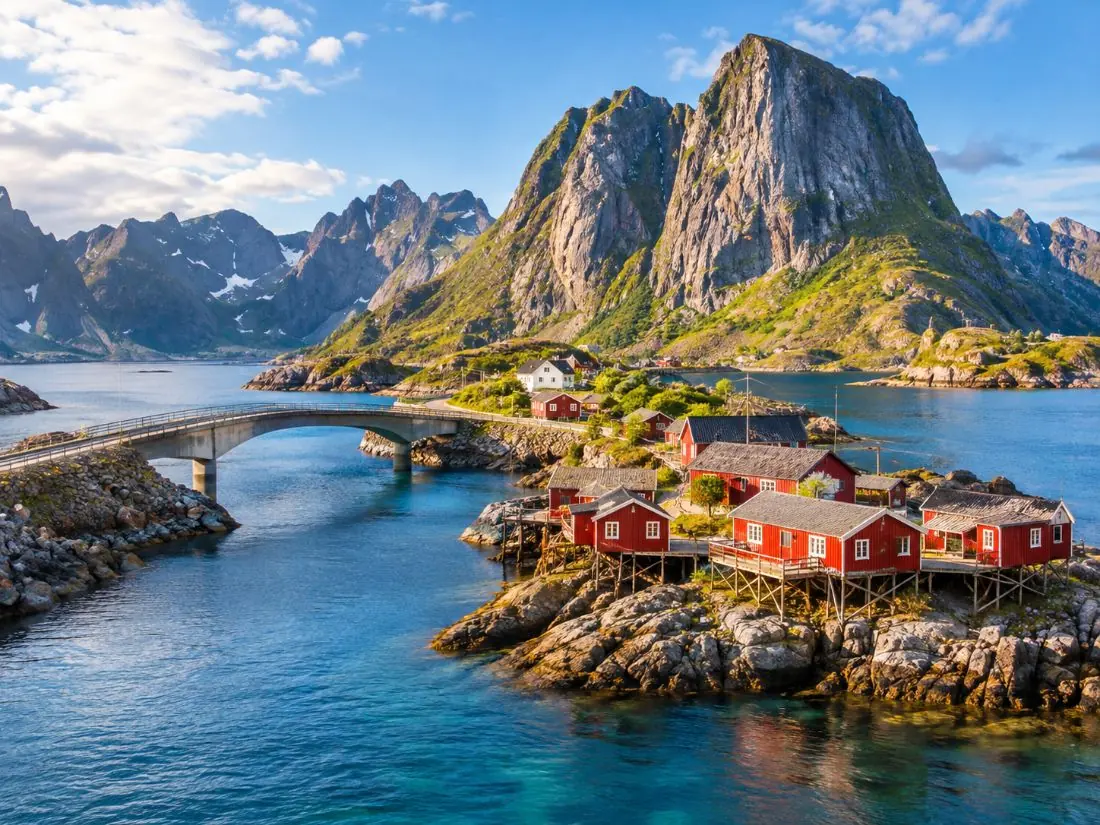
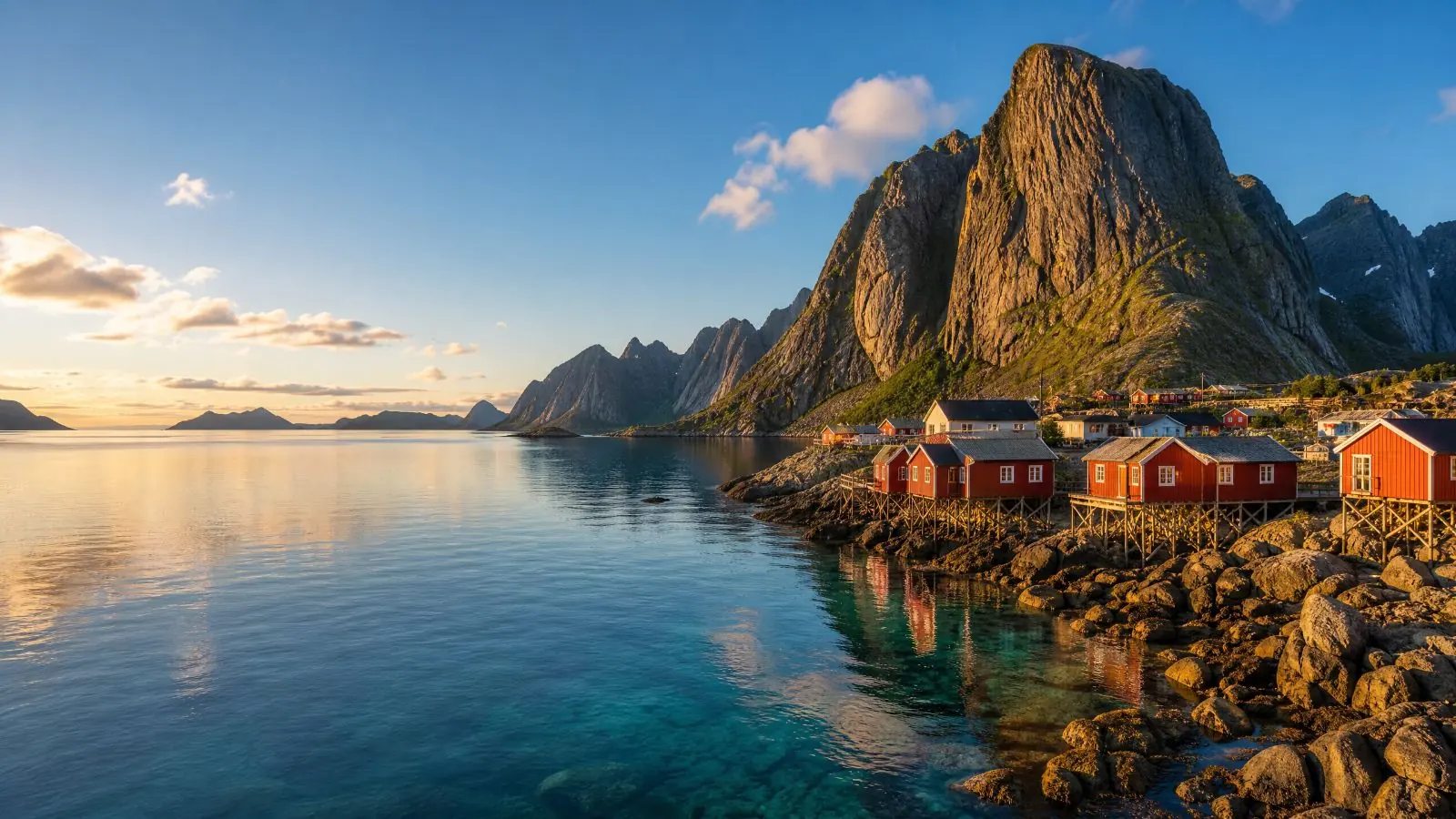
Reine, at the southern end of the islands, is the view most people come for.
Svolvær or Reine?
Svolvær, with about 4,800 people, is the only town of any size. It has the airport, the Hurtigruten quay, supermarkets, and
most of the tour operators on this page. Reine has under 300 residents, a few restaurants and the view on most Lofoten
postcards. The two are about two hours apart by car. If you only have three days, pick one end and do it well. With five or more,
split your stay: Svolvær or Henningsvær for the boat trips and the aurora, Reine or Hamnøy for the hiking and the scenery.
Read the start point: a tour "in Lofoten" almost always means a tour from Svolvær. If you are
staying near Reine, the only tour here that starts on your doorstep is the Reinefjord kayak.
Every tour page says where it begins.
Getting around without a car
You can, with patience. Buses run the length of the E10 from Svolvær via Leknes to Å, and the Bodø ferry lands at Moskenes,
a few kilometres from Reine. Many visitors combine a few days in Svolvær with guided tours that include hotel pickup, and one
long day tour to Reine and Å. One guest put it simply: she was glad she paid for
the tour rather than hiring a car. With your own car you get the beaches and the light on your schedule, at Norwegian rental
and fuel prices.
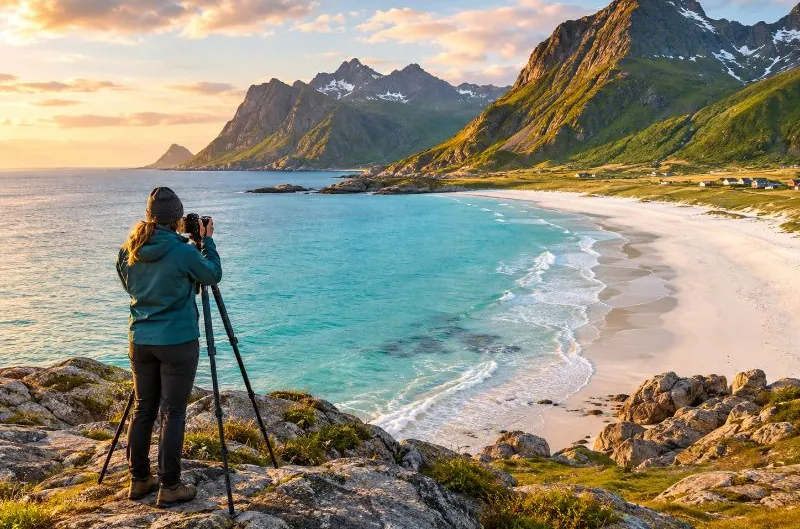
Haukland, ten minutes from Leknes, is one of the easiest beaches to reach.
The light decides the trip
From late May to mid July the sun does not set at all, and hikers climb Reinebringen's nearly 2,000 stone steps at midnight.
From late August the nights darken and the northern lights return, often visible even when activity is low, since Lofoten sits
under the auroral oval. Around Christmas the sun does not rise for three to four weeks, but clear days still bring hours of
blue twilight. Pick your month for the light you want, then book the tours that suit it: boats and kayaks in summer, aurora
nights from autumn to spring.
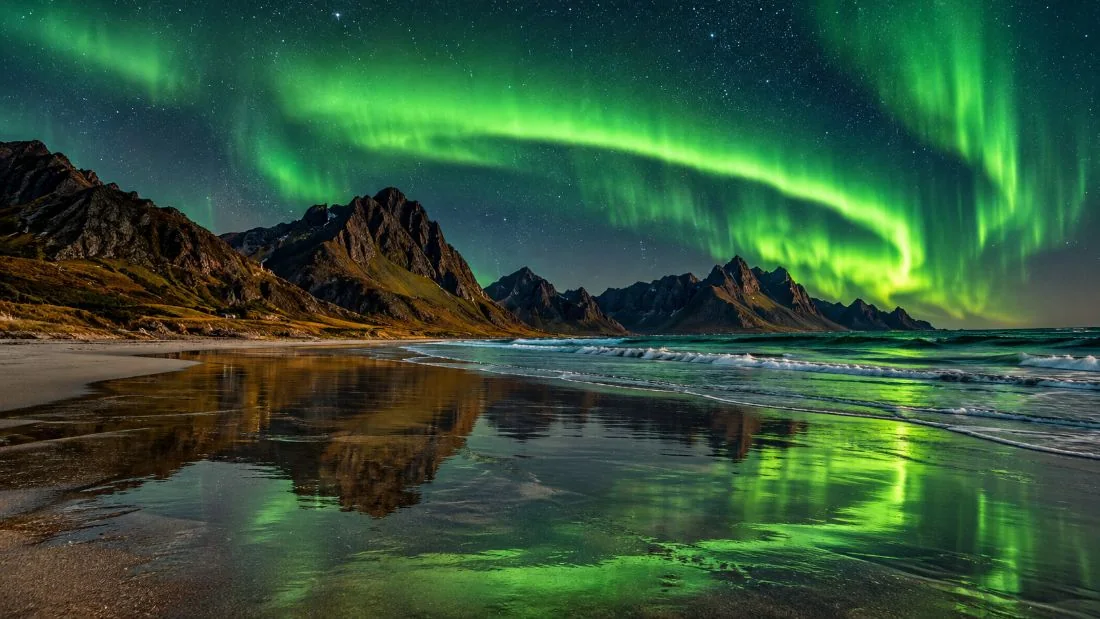
On a clear night between late August and mid April, the aurora can appear over almost any beach.
Straight answers to what people ask most about the Lofoten Islands.
What is the best month to visit Lofoten?
It depends on what you came for. Late June to mid July brings the midnight sun and the best hiking. Late August and September give quieter trails, autumn colour and the first northern lights. February and March combine snow, longer days, the aurora and the cod season. Our month-by-month guide goes through the whole year.
How many days in Lofoten is enough?
Plan three days at the very least, and five to seven if you want to hike and see both ends of the islands. The E10 runs 163 km from Fiskebøl to Å, and Svolvær to Å alone is about 2.5 hours of driving each way. See how many days you need for sample plans.
Is it hard to get to the Lofoten Islands?
It takes planning more than effort. Widerøe flies to Svolvær and Leknes from Bodø and Tromsø, with summer flights from Oslo. The Bodø to Moskenes car ferry takes about 3 hours 15 minutes, and Harstad/Narvik Evenes airport is about 2.5 hours by road from Svolvær. All the routes are in our getting there guide.
What airport should I fly into for Lofoten?
Svolvær (SVJ) if you want the town where most tours start, Leknes (LKN) for the middle of the islands, or Harstad/Narvik Evenes (EVE) for cheaper flights from Oslo and a rental car. Bodø works if you add the ferry to Moskenes, which lands you next to Reine.
Is it expensive to go to the Lofoten Islands?
Yes, by most standards. Norway's restaurant and accommodation prices run about 40% above the EU average, according to Statistics Norway. The views, beaches and hikes are free; meals, rooms, car hire and guided tours are where the money goes, and foot passengers ride the Bodø to Moskenes ferry for free. Read what costs money and what is free.
Which village in Lofoten is the most beautiful?
Reine gets the vote most often: the weekly magazine Allers called it the most beautiful village in Norway in the 1970s, and the view of its red cabins under the peaks is the Lofoten postcard. Hamnøy, Sakrisøy, Nusfjord and Henningsvær are close rivals. Our Reine, Hamnøy and Å guide covers them.
Is Å in Lofoten a tourist trap?
Not really. Å is a small heritage fishing village of about 120 people at the very end of the E10, with the Norwegian Fishing Village Museum, a stockfish museum and a bakery. It gets crowded at midday in July, and parking fills fast. Arrive early or late and it is quiet.
When can you see the northern lights in Lofoten?
From late August to mid April, on clear dark nights, according to Visit Lofoten. The aurora is often visible at low activity levels this far north, so cloud matters more than the forecast index. No tour can guarantee it; the small-group northern lights night drives to clear sky.
Is Tromsø or Lofoten better?
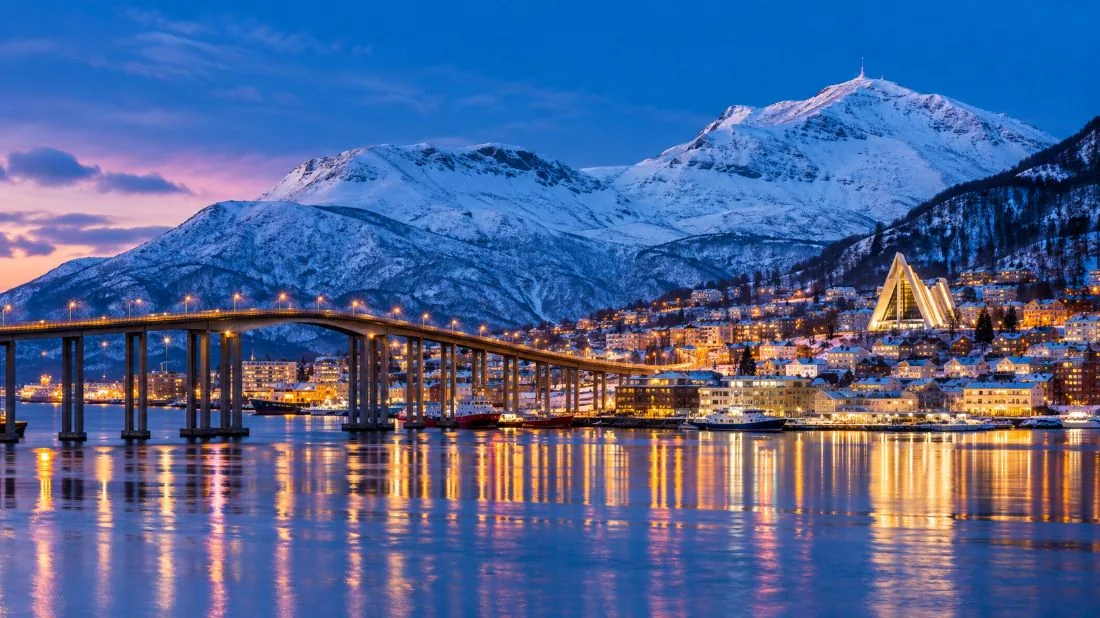
Tromsø is a city of about 80,000 with easy flights and winter whale trips. Lofoten is a string of fishing villages with the more dramatic scenery, and it rewards a car or a guide. Both sit under the auroral oval. Our Lofoten or Tromsø guide compares them for each kind of trip.
Can I drink the tap water in Lofoten?
Yes. Tap water from public waterworks in Norway is safe and good, and the tour operators here say the same. Be careful only with untreated water from streams or private cabin wells.
Are there polar bears in the Lofoten Islands?
No. Norway's polar bears live around Svalbard and the Barents Sea, far to the north. In Lofoten the big animals are sea eagles, seals, the occasional whale offshore and moose just north in Vesterålen.
Can I cancel a Lofoten tour?
Every tour on this site cancels for a full refund up to 24 hours before the start. If the operator cancels for wind, sea or cloud, you get a refund or a new date.
Ready to book
Pick your end, pick your light.
Small groups, pickup on many tours, and free cancellation up to 24 hours before on every one.
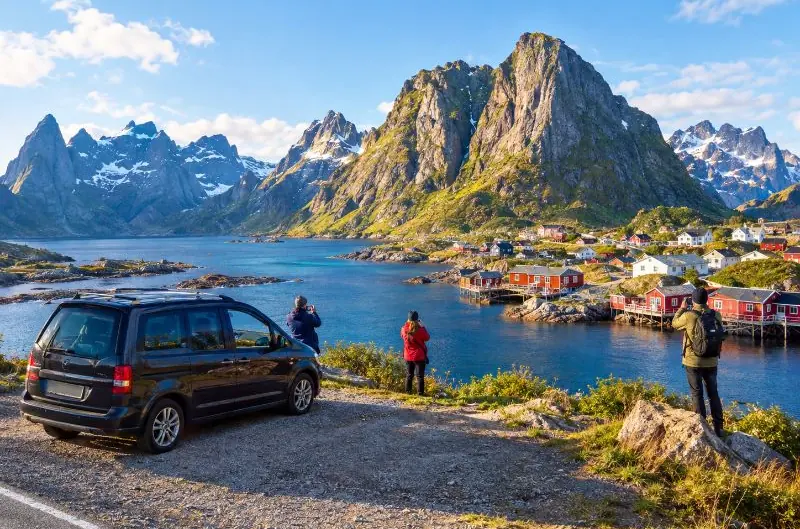 The postcard villages
★ 4.89 hoursFree cancellation